Emerald Ash Borer Has Arrived in Thunder Bay
Emerald ash borer (EAB) is an invasive beetle that has killed tens of millions of ash trees across North America since it was first detected in the Windsor area in 2002. In recent years, confirmed finds have moved steadily north and west, and Thunder Bay property owners now need to take the pest seriously. Green ash is one of the most common street and yard trees in the city, which means a large share of local canopies is vulnerable.
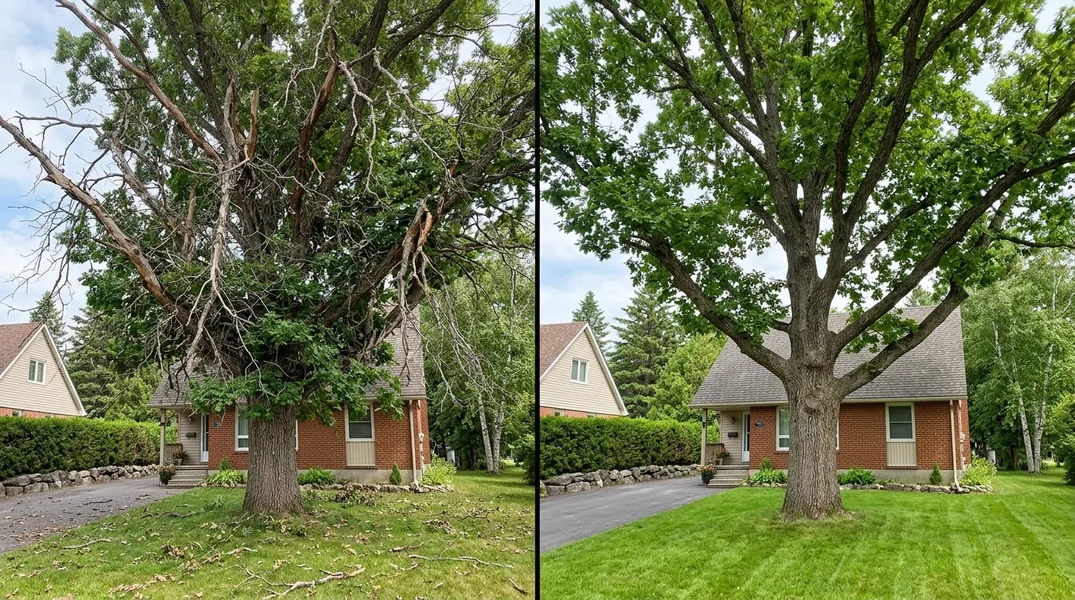
The insect itself is small and easy to miss, but the damage it causes is not. Larvae feed just under the bark and cut off the tree's vascular system, so an infested ash often looks fine until it is already in serious decline. Because ash trees lose their leaves late and regrow them early, a struggling specimen can blend in with healthy neighbours for a season or two. That delay is exactly why monitoring matters. If you suspect an ash on your lot is affected, an on-site assessment from an ISA Certified Arborist is the fastest way to confirm what you are dealing with.
How to Recognize the Signs of Emerald Ash Borer
The most reliable early indicators are canopy thinning that starts at the top of the tree and works downward, excessive sprouting from the trunk or lower branches, and bark that splits vertically over old larval galleries. Woodpeckers are another clue: heavy feeding activity on an ash trunk often means larvae are present underneath. If you peel back a loose piece of bark, you may find the distinctive S-shaped tunnels that larvae leave behind. Adults emerge through D-shaped exit holes roughly 3 to 5 millimetres across.
A dying ash tree can also show dieback on individual limbs, yellowing foliage in midsummer, and a general loss of vigour that looks similar to drought stress or root damage. That overlap is why guesswork is risky. A certified arborist can distinguish EAB damage from other problems and recommend the right response. If the tree is already heavily infested, Tree Removal may be the safest option, especially where the trunk is close to a house, driveway or service drop.
Treat, Monitor or Remove: Choosing the Right Response
Ash tree injection in Thunder Bay is a real option for healthy trees that are still in good condition. The treatment involves injecting a systemic insecticide into the base of the trunk, which the tree moves upward through its vascular tissue. It is not a cure and it does not reverse existing damage, but it can protect a valued tree for one to two seasons at a time. Injection works best on trees that are still vigorous and showing less than roughly 30 percent canopy loss. Larger, older ash with significant dieback usually do not respond well enough to justify the cost.
Monitoring makes sense for ash that look healthy but sit near confirmed finds. A yearly inspection, plus a watch for woodpecker damage and canopy thinning, gives you time to act before the tree becomes a hazard. Removal becomes the practical choice when more than half the canopy is gone, when the trunk is structurally compromised, or when the tree leans over a target you cannot move. After a removal, Stump Grinding clears the remaining stump so it does not become a trip hazard or a shelter for regrowth. Our crews can walk your property, identify which ash are worth saving and give you a written recommendation with clear prices before any work begins.
Firewood Rules That Slow the Spread
Emerald ash borer travels short distances on its own, but it moves much farther inside firewood. That is why Ontario regulates the movement of ash firewood out of regulated areas, and why the City of Thunder Bay and the province ask residents not to bring ash logs, branches or chips from other areas onto their property. Buy firewood locally, burn it where you buy it, and do not store leftover ash wood through the summer, when adults are emerging. If you are unsure whether your wood is safe to keep, the safest move is to have it chipped or disposed of through an approved channel.
Homeowners who remove an infested ash should also plan for what happens to the wood. Chipping, proper disposal and clean equipment all reduce the chance of spreading the pest to a neighbour's tree. Our teams follow those practices on every job and can advise on the right handling for your situation. For current rules and any municipal requirements around private tree work, check the City of Thunder Bay website before you schedule a removal.
Protecting the Rest of Your Canopy
Ash is the headline problem right now, but the same principles apply to the rest of your trees. Regular Tree Pruning removes dead and crossing limbs before they fail, improves airflow through the canopy, and makes it easier to spot pest damage early. Well-maintained trees tolerate stress better, whether that stress comes from insects, drought, or the freeze-thaw cycles that are common around the Thunder Bay area in late winter and early spring.
If you have ash on your property, the decision to treat, monitor or remove should be made with current information and a clear view of the tree. Our ISA Certified Arborists serve homeowners across Fort William (Thunder Bay), Westfort (Thunder Bay) and Northwood (Thunder Bay), and we can assess your ash, explain the options and provide a free estimate. Call Thunder Bay Tree Trimming Co. at (807) 699-7871 or request a quote online to get started.
Looking for a professional in Thunder Bay? Thunder Bay Tree Trimming Co. responds quickly for all your tree trimming needs.
Get a free estimateOur services : Tree Trimming · Tree Removal · Stump Grinding