



Tree Pruning in Thunder Bay
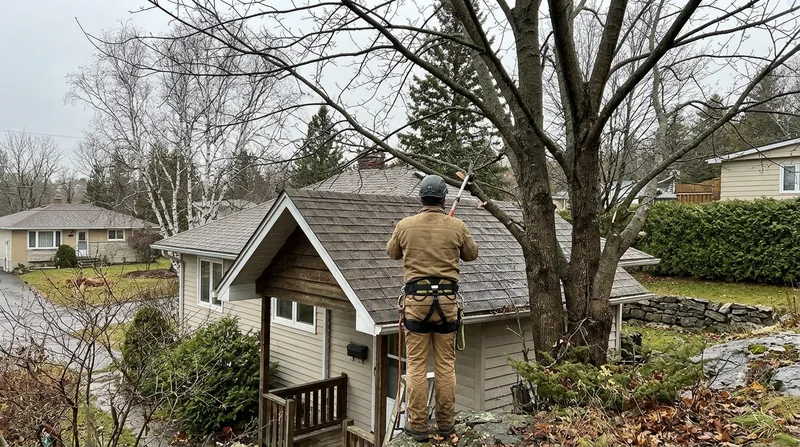
Tree pruning in Thunder Bay is not a cosmetic exercise. It is the most direct way to keep a mature maple, oak or birch standing through the ice storms, lake-effect snow loads and summer windstorms that define this region. Our ISA Certified Arborists work on private property across the city and the surrounding municipalities, from mature street trees in post-war subdivisions to ravine lots with steep access. We remove deadwood, correct weak unions and rubbing branches, and train young trees early so they build a structure that holds. Every visit starts with a free estimate and a clear written scope. For the full picture of what we do beyond pruning, see our tree trimming service.
Why structural pruning matters on Thunder Bay properties
Most of the damage we see after a storm did not start with the storm. It started years earlier with a codominant stem, a narrow V-shaped union, or a branch left to rub against its neighbour until the bark wore through. In Thunder Bay's freeze-thaw cycles, water enters those wounds, freezes, expands and opens the wood further. Pruning removes the weak point before the weather finds it.
- We remove dead, dying and diseased limbs before they drop on roofs, fences and vehicles.
- We correct weak unions and included bark on maple, oak and black locust while the tree is still young enough to respond.
- We thin the crown selectively to reduce wind sail without stripping the tree of its food-producing leaves.
- We clear branches away from private service entrance wires, always respecting approach distances and never touching the public distribution network.
- We document existing storm damage and hazardous limbs for your insurer if a claim becomes necessary.
Each cut is made with a purpose, and every tree leaves the site with a cleaner structure than it arrived with.
Key fact: A mature silver maple in Westfort with a codominant stem at 4 metres is a candidate for cabling and bracing rather than removal. A pruning visit combined with a brace can add 10 to 15 years of safe life to a tree that would otherwise be condemned.
For the official context on tree protection and permits, consult the in Thunder Bay and the surrounding area government's forestry pages before any removal is planned.
How our crews prune a tree, step by step
Pruning is a sequence, not a single cut. Our arborists assess the tree from the ground, then from within the crown, and only then decide which limbs come out. On tight backyards reachable only through a standard gate, we rig limbs down in controlled sections rather than dropping them. On ravine lots, we set anchors and work with ropes to avoid soil compaction on the slope.
- We inspect the tree for deadwood, cracks, fungal conks and weak unions, and we note anything that needs a closer look.
- We set the work plan: which limbs are removed, which are reduced, and which are left untouched for the tree's health.
- We make the cuts with sharp saws, using the three-cut method on larger limbs to prevent bark tearing.
- We lower or chip the debris as we go, keeping the work area clear and the lawn protected.
- We review the finished tree with you and leave the property clean, with the brush chipped and removed.
The result is a tree that keeps its natural form, not a stub-cut hedge on a tall trunk.
Key fact: On a mature oak in Oliver Paipoonge, we removed 11 dead limbs and two rubbing branches in a single morning, chipped the brush on site and left the firewood cut to length. The homeowner kept the wood and paid nothing for disposal.
If the crown needs support rather than removal, our tree cabling and bracing service pairs with pruning to hold a weak union together.
Pruning methods we use, and when each one applies
Not every tree needs the same treatment. A young sugar maple in a new subdivision needs training cuts; a mature ash already showing emerald ash borer symptoms needs a different plan entirely. The table below shows the main methods we apply and the context that calls for each.
| Method | Description | Context |
|---|---|---|
| Crown cleaning | Removal of dead, dying, diseased and broken branches. | Every mature tree, especially after a windstorm or ice storm. |
| Crown thinning | Selective removal of interior branches to improve light and air movement. | Dense crowns on maple and oak that hold snow and catch wind. |
| Crown reduction | Reduction of height or spread back to a lateral branch. | Trees too close to a house, garage or private service entrance. |
| Structural training | Early cuts on young trees to establish one leader and strong unions. | Newly planted or young street trees in post-war neighbourhoods. |
| Deadwood removal | Targeted removal of standing dead wood over targets. | Ash killed by emerald ash borer, and storm-damaged crowns. |
The right method depends on species, age, site and target. Our arborist chooses it on site, not from a call centre.
What governs pruning work in the Thunder Bay area
Two rules shape every job we take on. First, the City of Thunder Bay may require a permit for a private tree removal, and the application is normally supported by an arborist report. Rules and thresholds differ from one municipality to the next across the Thunder Bay area, so we check before any removal is scheduled. Second, approach distances must be respected near private electrical service entrances. A tree touching the public distribution network is referred to your local utility or Hydro One; we never work on that network.
On the disposal side, we chip the brush and either leave the chips for your garden or haul them away. Firewood is cut to length and stacked if you want it. We do not burn on site and we do not leave debris in the boulevard. For a removal that requires municipal approval, our arborist report service provides the documentation the City expects.
Key fact: A homeowner in Gillies wanted a mature birch taken down near the property line. Because the tree sat within the setback and the removal required review, we prepared the arborist report first, then scheduled the work once the file was complete. No surprises, no stop-work order.
When to prune, and what it costs
Trimming and structural pruning are best done in dormancy, from late fall to late winter, when the tree's energy is in its roots and the canopy is visible without leaves. That window also avoids the spring sap flow on birch and maple. Emergency work runs year-round, peaking with ice storms and summer windstorms. Cedar hedges are trimmed in late spring and summer, and emerald ash borer injection runs from late spring to early summer.
Pricing depends on tree size, access, the number of cuts and the disposal plan. A small ornamental prune starts at $225, while a large mature maple with rigging and chip removal runs higher. Our full pricing grid shows the ranges, and the estimate is free. For a written quote on your property, call (807) 699-7871 or use the contact page.
We are a local, fully insured company, and our ISA Certified Arborists are on staff. That matters when a storm hits and you need a decision made quickly and correctly.
Prices Tree Pruning in Thunder Bay — Indicative pricing
| Service | Price | Details |
|---|---|---|
| Small ornamental prune | From $225 | Young or small tree, hand cuts, chip and removal included |
| Medium tree structural prune | From $475 | Mature tree up to 12 metres, deadwood and rubbing branches removed |
| Large mature tree prune | From $850 | Rigging, controlled lowering, chip removal, up to 20 metres |
| Complex or high-access prune | On estimate | Ravine lot, tight backyard, crane or specialized rigging |
| Travel | Included | In Thunder Bay and the surrounding area |
| Estimate | Free | Reply within 24 hours at (807) 699-7871 |
Indicative prices; free, personalized estimate within 24h at (807) 699-7871.