Why Camp and Cottage Trees Need a Different Approach
Cottage and camp properties around Thunder Bay present tree care challenges that a typical suburban lot does not. Buildings are often close to mature spruce, birch and aspen, and the trees have grown for decades without regular attention. A spruce that was 3 metres from a cabin wall twenty years ago may now have branches pressing against the roof, while birch clumps near a deck can drop limbs after a windstorm or ice storm. The lake effect weather in this region adds stress: freeze-thaw cycles in late winter and early spring crack bark and weaken unions, and summer windstorms bring down deadwood that was not visible from the ground.
Camp tree removal in Thunder Bay also involves access questions. Driveways are narrow, septic beds and wells sit near the work zone, and there may be no room to drop a tree whole. Our crews plan each job around the structures, the service entrance and the landscaping that owners want to keep. That planning starts with a walk-through and a written scope, so the property owner knows exactly which trees will be trimmed, which will be removed and how the debris will be handled. For properties with several buildings and a mix of species, a free estimate is the practical first step.
Spruce Tree Trimming for Roof Clearance and Structural Health
Spruce is the workhorse conifer of the Thunder Bay area, and it is also the species most often planted too close to a cottage or camp building. Lower branches that touch a roof or wall trap moisture, accelerate shingle wear and give squirrels and rodents a highway onto the structure. Tree Trimming on spruce is not simply a matter of cutting the lowest limbs: removing too much live growth in one pass can leave the tree unstable and expose the trunk to sunscald. Our arborists lift the canopy gradually, respect the live crown ratio and leave clean pruning cuts that close over properly.
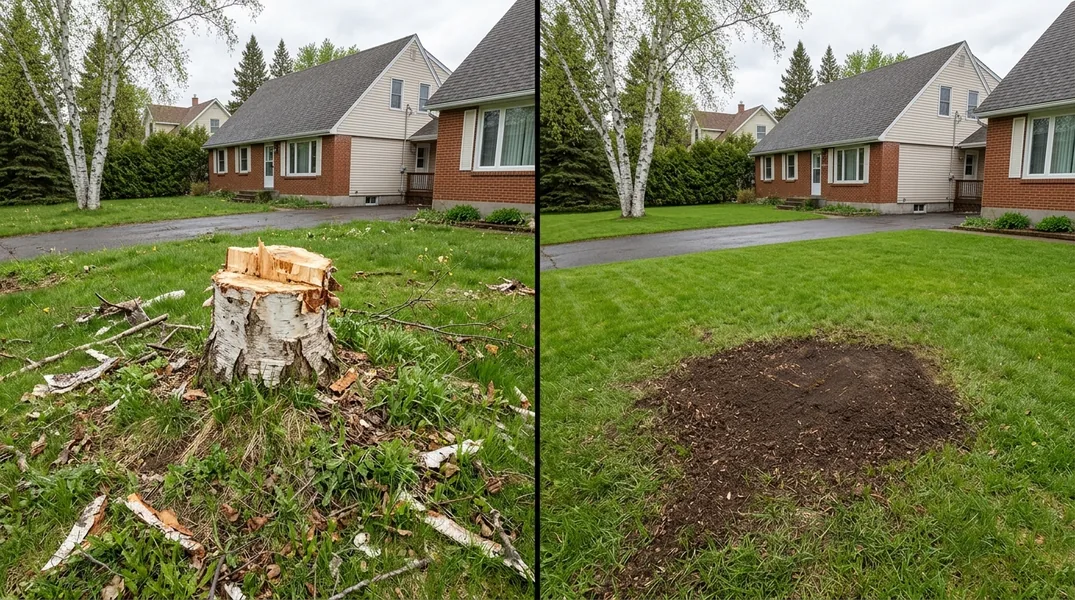
Roof clearance trees around Fort William (Thunder Bay) and the surrounding rural properties are usually handled with a combination of climbing and aerial work, depending on the height and the drop zone. Where a spruce has died or become a hazard to a building, Tree Removal may be the safer choice, and the stump can be dealt with by Stump Grinding so the lawn or driveway can be restored. We also check the private service entrance during every visit and keep our work well clear of the wire from the pole to the building, in line with the approach distances set for the customer's own service. Any work on the public distribution network is left to your local utility or Hydro One.
Birch Tree Pruning: Timing, Borers and the Risk of Over-Pruning
Birch is one of the most requested species for Tree Pruning in the Thunder Bay area, and also one of the most misunderstood. Birch bleeds heavily if pruned in late spring when sap is running, and the open wounds attract bronze birch borer, a pest that has killed a great many landscape birches across the region. The practical window for birch tree pruning is late summer through early winter, after the leaves have hardened off and the insects are less active. Removing dead, crossing or rubbing branches during that window protects the tree and keeps the canopy from striking a roof or eave.
Owners often ask us to reduce a birch that has grown over a cabin or shed. Heavy topping is the wrong answer: it produces weak regrowth, shortens the life of the tree and creates a future hazard. Our approach is selective reduction, thinning the crown where it overhangs a structure and removing only what the tree can afford to lose. Where a birch clump is already declining, we will say so plainly and outline the options, including removal and replacement with a species better suited to the site. That kind of straight assessment is part of what a certified arborist brings to a cottage property.
Aspen Tree Removal: Suckering, Decay and Building Safety
Aspen, often called trembling aspen or poplar locally, grows fast and spreads aggressively through root suckers. On a camp or cottage lot it can colonize a clearing in a few seasons, and its wood is prone to internal decay while the tree still looks healthy from the outside. Aspen tree removal is frequently the right call when a mature stem leans toward a cabin, a bunkie or a parked vehicle, or when the trunk shows conks, cracks or a hollow sound. Because aspen often grows in clumps, removing one stem can trigger a flush of suckers from the shared root system, so the job needs to be planned rather than improvised.
Our crews assess the lean, the decay indicators and the drop zone before any cut is made. Where a stem must come down near a building, we use controlled sectional removal and rigging to lower pieces rather than felling them whole. After removal, we discuss sucker management with the owner, since mowing or treating the regrowth in the first seasons makes a real difference to how the site looks in future. Properties in Westfort (Thunder Bay) and on rural lots nearby often combine aspen removal with Tree Removal of other hazard trees in the same visit, which keeps mobilization costs down. Our rates are quoted per job after a site visit, not guessed over the phone.
Permits, Insurance and Documentation for Cottage Tree Work
The City of Thunder Bay may require a permit for a private tree removal, and an arborist report can support that application. Rules vary with the location and the tree, so the safest approach is to confirm requirements before any saw is started. We help owners understand what applies to their property and can provide a written arborist report where the municipality asks for one. This is a genuine advantage on cottage files, where a removal may sit close to a shoreline, a road allowance or a neighbouring lot.
For storm damage, we document the condition of the tree and the affected structure with photographs and notes so the owner has a clear record to pass to their insurer. We do not promise that a claim will be paid; that decision belongs to the insurer. What we can do is make the cleanup safe, protect the remaining trees and leave the site tidy. Our company is local and fully insured, and every job begins with a free estimate and a written scope. If a tree near your building needs attention before the next windstorm, call Thunder Bay Tree Trimming Co. at (807) 699-7871 or request a free quote online.
Seasonal Timing for Camp and Cottage Tree Care
Timing matters more on a camp property than on a city lot, because access and ground conditions change through the year. Late winter is often the best window for removals and heavier trimming: the ground is frozen, the foliage is off the deciduous trees and the view of the canopy is clear. Spring and early summer are better reserved for hazard assessments and light work, since birch should not be pruned while sap is running and soft ground limits what equipment can reach without damage. Late summer through fall is the right period for birch pruning and for cleaning out deadwood before snow load arrives.
Owners in Northwood (Thunder Bay) and across the surrounding municipalities often book a single autumn visit that covers spruce roof clearance, birch pruning and a look at any aspen that has started to lean. That consolidated approach is cheaper than three separate call-outs and gives the property a clean start before winter. Our ISA Certified Arborists will tell you honestly what can wait a season and what should not, and the recommendation is always based on the tree in front of us rather than a sales target. Book early, since the fall schedule around Thunder Bay fills quickly.
Looking for a professional in Thunder Bay? Thunder Bay Tree Trimming Co. responds quickly for all your tree trimming needs.
Get a free estimateOur services : Tree Trimming · Tree Removal · Stump Grinding