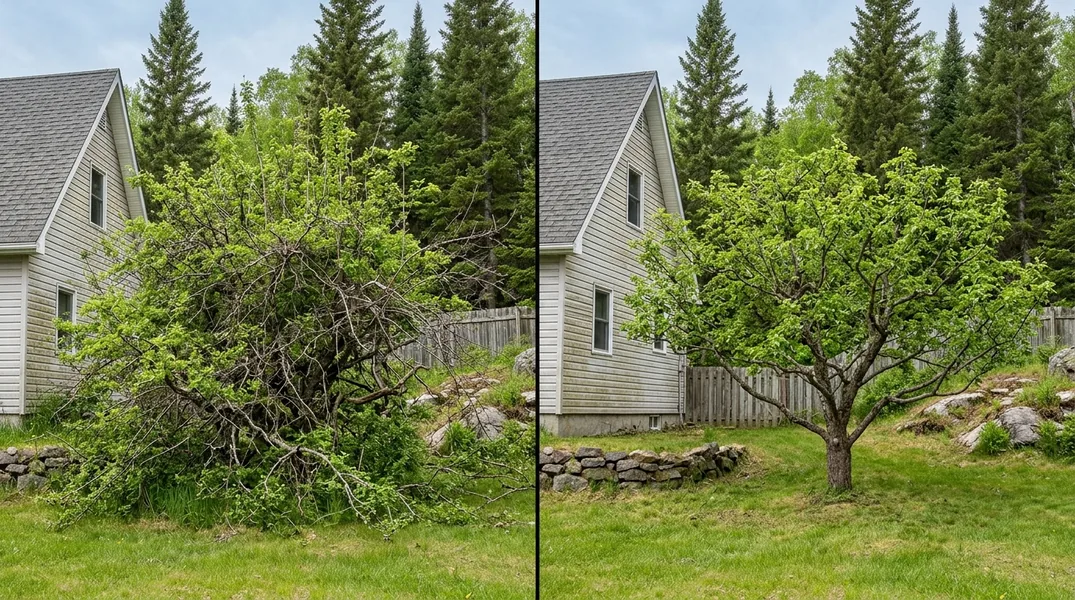
Why the 2012 Flood Still Matters for Trees on Low, Wet Ground
In May 2012, a slow-moving storm system stalled over the city and dropped an extraordinary volume of rain in a short window. Low-lying pockets, especially around the river flats and older residential blocks, took on water that stayed for days. More than a decade later, our crews still find the fingerprints of that event in the urban canopy: leaning birches, hollow root flares on maples, and spruces that never regained their pre-flood form.
The reason is simple. Most tree roots live in the top 30 to 60 centimetres of soil, and they need air as much as water. When the ground is saturated for an extended period, the pore spaces that normally hold oxygen fill with water instead. Roots suffocate, fine feeder roots die back, and the tree begins to decline from the bottom up. On the heavy Ontario clay common in low areas of Thunder Bay, that drainage problem can persist for years because clay holds moisture and releases it slowly.
Homeowners who bought property after 2012 often inherit a tree that has been quietly stressed for a decade. A tree inspection after a flood is not about panic; it is about reading the signs early enough to choose between careful management and removal.
Reading the Signs of Waterlogged Tree Roots
Waterlogged tree roots rarely announce themselves with a single dramatic symptom. Instead, you see a pattern. Leaves may be smaller than normal, or the crown may thin from the top and outside inward. Some species push out a heavy crop of seeds as a stress response. Dieback often appears on one side of the tree first, usually the side facing the lowest ground. In conifers such as spruce, you may notice needles yellowing on inner branches while the tips stay green for a season or two.
At the base, look for a few specific clues. Cracks or seams in the soil around the trunk, a root flare that sits lower than it should, or mushrooms and conks growing near the base all suggest decay. A tree that leans after a wet spring, even slightly, deserves a close look, because saturated soil offers poor anchorage. If you can push a screwdriver into the ground near the trunk with almost no resistance weeks after the last rain, drainage is still compromised.
This is where professional assessment earns its keep. Our ISA Certified Arborists evaluate crown structure, root stability and soil conditions together, then explain the realistic options. In many cases a waterlogged tree can be preserved with corrective Tree Pruning to remove dead wood and reduce sail area, combined with a light fertilization program once the ground dries. In others, the honest answer is that the tree has become a hazard and should come down before a windstorm makes that decision for you.
Storm Damage and the Case for Prompt Removal
Wet soil and wind are a dangerous combination. A tree that stood firm for fifty years on well-drained ground can uproot in a single gust once its root plate is soft. After major rain events, we receive calls about split leaders, hanging limbs over roofs and driveways, and trunks that have shifted enough to crack the soil on one side. Those are not cosmetic problems. A partially uprooted tree can finish falling weeks later, often on a calm day with no warning.
For storm damage tree removal in Thunder Bay, timing matters for two reasons. First, safety: a compromised tree over a walkway, a hydro service line or a child's play area should be addressed quickly. Second, cost: a tree that is still standing can be taken down in a controlled way, piece by piece, with rigging and proper drop areas. Once it has fallen onto a fence, a shed or a vehicle, the job becomes more complex and more expensive. Our team handles emergency tree removal across the city and can assess whether a damaged tree can be saved or must be removed.
If a tree on your property has failed or is leaning after a storm, keep people and pets clear of the area and call our team for a free estimate or reach us at (807) 699-7871. We document the damage carefully so you have a clear record for your insurer, though coverage decisions always rest with your provider.
Neighbourhoods That Need Extra Attention: Northwood and the Low Flats
Not every part of the city drains the same way. Older neighbourhoods built on former creek beds or low ground near the rivers tend to hold water longer, and the trees planted there decades ago were often chosen for looks rather than for tolerance of wet feet. Homeowners in Northwood (Thunder Bay) and along the lower streets of Westfort (Thunder Bay) frequently describe the same set of issues: mossy lawns, standing water in spring, and mature trees that have thinned noticeably since the flood year.
Northwood flooding trees present a particular challenge because many lots have both mature canopy and limited room to work. Removing a large tree in a tight residential backyard requires rigging, careful planning and respect for fences, sheds and neighbouring structures. The same applies in the older parts of Fort William (Thunder Bay), where mature maples and elms line narrow lots and service wires cross the yard. Our crews plan every removal around the private service entrance and maintain safe approach distances from any overhead line, and we never work on the public distribution network itself.
If your street has a history of standing water, it is worth booking an inspection even if nothing looks urgent today. Early intervention on a stressed tree is almost always cheaper than an emergency call after the next big rain.
What a Proper Post-Flood Tree Inspection Covers
A useful inspection is more than a glance from the sidewalk. It starts with a walk of the property to map which trees sit in the lowest ground and which show symptoms. From there, we examine the trunk for cracks, seams and signs of decay, check the root flare for stability, and assess the crown for dead wood, crossing limbs and weak unions. Where relevant, we note the condition of hedges and understory planting, since cedar hedge trimming and general Tree Trimming schedules often need adjusting after a wet cycle.
You receive a plain-language summary of what we found and what we recommend, along with clear rates before any work begins. If a removal is required, we can advise on whether the City of Thunder Bay may require a permit for a private tree removal and whether an arborist report would support the application. We do not quote permit fees or timelines we cannot verify, but we can point you to the City of Thunder Bay for the current rules. Where a tree must come out, Tree Removal includes cleanup, and we can follow with Stump Grinding so the site is ready for replanting.
Protecting the Trees You Keep
Once the ground dries, there is real work that helps a flood-stressed tree recover. Avoid driving or parking on saturated soil, because compaction compounds the damage that water has already caused. Keep mulch a few centimetres back from the trunk, and do not pile soil over the root flare in an attempt to level the ground. If you are replanting a wet spot, choose species that tolerate periodic saturation rather than repeating the original mistake.
Above all, resist the urge to prune heavily in the first season after stress. A tree needs its remaining foliage to rebuild energy reserves. Corrective work should target dead, broken and hazardous limbs, not a wholesale reduction of the crown. Our arborists can set a multi-year plan so the tree is managed rather than shocked.
Thunder Bay Tree Trimming Co. is a local, fully insured company serving homeowners across the city. If your property sits on low, wet ground and you are unsure about the health of your trees, book a free estimate at thunder-bay-tree-trimming.ca/quote or call (807) 699-7871. A short visit now can prevent a much larger problem after the next storm.
Looking for a professional in Thunder Bay? Thunder Bay Tree Trimming Co. responds quickly for all your tree trimming needs.
Get a free estimateOur services : Tree Trimming · Tree Removal · Stump Grinding